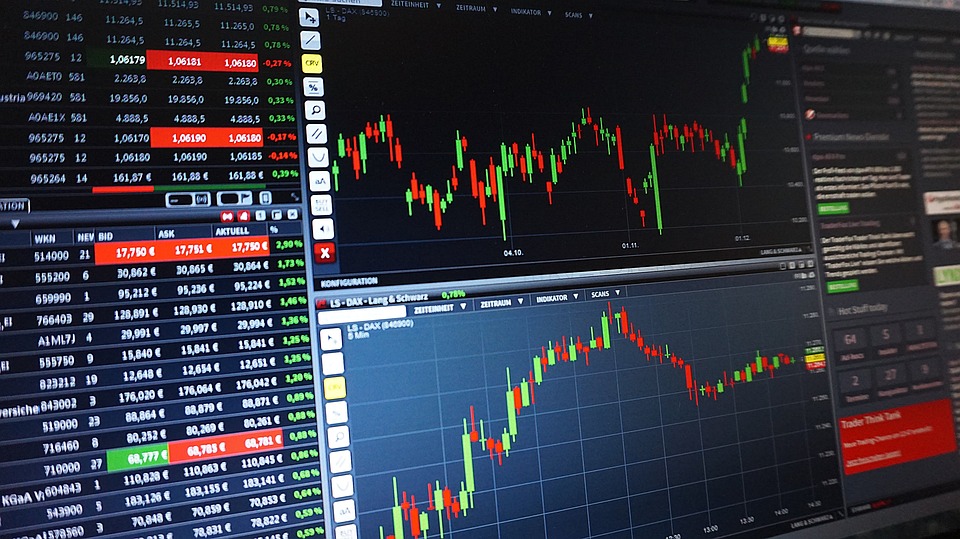
In a landscape as volatile and dynamic as cryptocurrency, understanding trends can be as challenging as navigating the market itself. The intricate world of cryptocurrencies not only requires a grasp of economic principles and technology but also demands the ability to interpret complex data visualizations. Analytical diagrams play a crucial role in deciphering market trends, providing investors with a visual representation of data that can inform their strategies.
The Importance of Analytical Diagrams in Cryptocurrency
Analytical diagrams are visual representations that help distill large sets of data into interpretable formats. In the world of cryptocurrency, they can include line charts, candlestick charts, bar graphs, and network graphs, among others. These diagrams allow traders and investors to observe patterns, identify potential trends, and make informed decisions based on historical performance.
1. Line and Candlestick Charts
Line charts are perhaps the simplest form of data visualization, often used to display the price movement of a cryptocurrency over time. They connect data points with a continuous line, providing a clear view of the asset’s price trajectory. However, for a more nuanced understanding, traders frequently turn to candlestick charts.
Candlestick charts offer deeper insights by illustrating the opening, closing, high, and low prices within a specific time frame. Each candlestick represents a time interval (be it a minute, day, or week), allowing traders to observe price movements and gain a more comprehensive view of market sentiment. The color of the candlestick—green for bullish movements and red for bearish—adds a visual cue to market psychology.
2. Volume Trends
Volume, the number of transactions executed within a given timeframe, is another critical indicator. High trading volume often signals a strong trend, whether bullish or bearish. Diagrams that illustrate volume trends alongside price movements can further clarify whether a price change is supported by strong market participation.
For instance, if a cryptocurrency is experiencing an upward price movement supported by increasing volume, it indicates strong buying interest, while a price increase accompanied by low volume may suggest a lack of conviction among buyers.
Advanced Analytical Diagrams: More than Just Price
Beyond basic price charts, several advanced analytical diagrams offer compelling insights into market trends:
- Network Graphs: Show the relationships between different cryptocurrencies and their transaction volumes, helping to understand how market dynamics operate on a broader scale.
- Heat Maps: Visualize market data in color-coded formats, indicating price movements and fluctuations across various cryptocurrencies at a glance.
- Correlation Matrices: Analyze how different cryptocurrencies move in relation to one another, which can be essential for portfolio diversification.
1. Network Graphs
Network graphs provide an innovative way to understand the interconnected nature of various cryptocurrencies. These diagrams illustrate how transactions circulate among different tokens and can highlight which cryptocurrencies influence others. For instance, they can reveal how Bitcoin’s price fluctuations often impact altcoin performance, providing insights into market dependencies.
2. Heat Maps
Heat maps capture data intensity through color variations. In the context of cryptocurrencies, they can represent real-time price movements of various assets, allowing traders to identify trends quickly. A well-designed heat map can show which cryptocurrencies are performing exceptionally well and which are underperforming in a visually engaging manner.
3. Correlation Matrices
Correlation matrices are indispensable for investors looking to create diversified portfolios. By mapping the performance of multiple cryptocurrencies against one another, these matrices show which assets tend to move together and which do not. A high positive correlation might indicate that two assets react similarly to market news or trends, while negative correlation can suggest that holding both may reduce risk.
Understanding Data Limitations
While analytical diagrams can significantly enhance your understanding of cryptocurrency trends, it’s vital to recognize their limitations. First and foremost, these diagrams rely on historical data, which does not guarantee future performance. Market conditions can change rapidly due to macroeconomic factors, regulatory news, or technological advancements.
Additionally, visualizing vast amounts of data can sometimes lead to oversimplification or misinterpretation. Investors are encouraged to use analytical diagrams alongside sound research and due diligence to make informed decisions.
Conclusion: The Future of Analytical Trends
As the cryptocurrency market continues to evolve, so too will the tools we use to analyze it. Innovations in data visualization technologies and techniques promise to make analytical diagrams even more informative and user-friendly. For investors and enthusiasts alike, mastering the art of reading these diagrams will be crucial in navigating the unpredictable waters of cryptocurrency trading.
In a world where every second counts, being equipped with the right analytical tools can mean the difference between substantial gains and staggering losses. As you delve into the world of cryptocurrency, embracing these analytical diagrams could prove to be your most valuable asset.


![Unlocking the Future: How [App Name] Simplifies Bitcoin Transactions for Everyone](https://cdn.pixabay.com/photo/2021/06/27/22/02/bitcoin-6370157_960_720.jpg "Unlocking the Future: How [App Name] Simplifies Bitcoin Transactions for Everyone")